To The Valley of Gold
Austerity strikes changed our train journey into a bus trip, but we are on holiday, who cares. The Scania bus was a very smooth bit of gear, super quiet, lots of power, and a great preselector gearbox. We didn’t really have much idea or confidence that we were heading in the right direction, however we eventually got to Carrazeda Ansiaes via some roads you wouldn’t believe for what seemed like a ‘main road only’ style bus. The bus had to squeeze past the odd ute inconveniently parked in narrow cobbled village streets. At our stop we were met by the hosts and driven down the hill to Alojamento Senhora da Ribeira, a little inn alongside the river.

We had a short walk, but it was very hot, so we decided it was time for a beer. There were two others on the terrace, a young German girl, Katrina, and Mario, local vineyard owner and winemaker. We had a long conversation on the valley and his vineyard history …. how do you make a little bit of money out of a vineyard?? Start with a lot of money!!
Mario invited us up for a visit so we saw his operation and participated in the process. Some of my DNA is now in the 2012 vintage, and I didn’t even have to resort to the Canterbury stubbies and my Northern Territory black singlet brought specially to wear at any wine pressing opportunity. It was a sad day for Portugal. Harvest has finished and the vat in the picture is Mario’s last brew for 2012. This visit also allowed us to start the wine collection for the canal boat cruise. This was a little earlier than planned but we will enjoy drinking some of Mario’s wine while we tell the Douro story.
BTW the wine collection for the cruise is Choco and Vikki on whites, Steve and Ann on reds. So we start with Marios Negreiros 2007 Riserva which won gold at the Brussels show. If you do Google Earth, the vineyard is Quinta das Amendoeiras, and is the 10 hectares behind the inn.
Senhora da Ribeira walk
Starts with a casual 5 km stroll along the river, great views across the developments on both banks. It's very dry and quite a few trees are showing terminal stress. We met a shepherd we’d seen the previous day, herding his long-haired sheep along the road and pruning neighbouring vines. We’d seen him yesterday and guess it’s his fulltime job.

We ducked a 7.5 km walk up the hill and our taxi driver and his gorgeous companion drove us up to Pinhal do Douro, about 1000m higher and left us with our picnic lunch. We did see some harvesting as we drove up, but it’s mostly over.
Carefully following instructions we took the trail down an ancient cobbled walk with stone walls on each side. We're not sure who built the track, but at some stage it was the connection between Pinhal village and Coleja. There were great views and it was better to be descending than ascending. There were plenty of cork trees, with red trunks stripped of their bark, and also olives and grapes. We did say no to an invitation to drink some wine with an already three sheets to the wind resident of the first village who was arguing loudly with one of his neighbours. Very hot conditions for walking, but a great way to start. Found a spot under an olive tree for our picnic.
Back to the accommodation for a beer, G&T a coffee and an ice-cream, a bit of a wait for our trip in an ancient boat across the river to our taxi to the next spot, Casa de Casal de Loivos. (Trains still not running) The drive took almost an hour and a half, winding around high terraced hills, and little villages. Big quintas in places and trucks rolling up full of grapes to be processed. A spectacular part of the valley.
Casa de Casal de Loivos http://www.casadecasaldeloivos.com has a commanding view down over the Douro, from a beautiful terrace and swimming pool area, so we sat out for a pre-dinner drink, until driven in by mosquitos. Dinner was around the big table with a Canadian and a German couple. English dominated and we shared views on politics, immigration and the economy (seemed most issues are similar in each country.) Attentive staff and delicious food. Drank a Douro valley white wine. (Kopke) which was fresh and crisp.
Casal de Loivos to Vilarinho de Sao Romao
After a relaxed breakfast, we put on the dusty boots and headed off, map and walking notes at the ready. Snatches of village life were intriguing, like the butcher's van visiting.
The walk today involved quite a lot of height loss and gain! First we wound down to the River Pinhao, along terraced vineyards and cobbled lanes. Many tempting fruit en route; figs, grapes, blackberries, nectarines! Crossed the river and then the climb started up through a pine forest to the village of S. Cristovao do Douro. Great allotment gardens as we approached. Runner beans, tomatoes, squash, brassica. Very lush and well-tended. We were greeted by an elderly couple sitting on their veranda, as we wandered up the narrow cobbled streets.


Further up the climb we reached the village of Provesende. This town is quite historic as rebellious aristocrats from Lisbon were exiled here, and there are many aging mansion houses to attest to their occupation. Also many old abandoned houses for sale, significant do-uppers.
Provesende had an amazing Gothic church – ornate being an understatement. Also a large cross (pillory) in the middle of town where public hangings once took place. (I now understand the meaning of ‘pilloried’ much more graphically!) We had our picnic here – huge doorstep sandwiches, provided by the last accommodation.
Then we carried on climbing up more narrow cobbled lanes. Great expansive views of terraced plantings made for much needed photo stops, including one of the Taylors Estate plantings. It’s interesting to get a better sense of the provenance of these ports. The climb eventually reached the Capel de Sao Domingos on top of an 800m hill. Not sure why one would build a chapel in such an inaccessible spot, but apart from the broken glass in the window it looked well-tended.
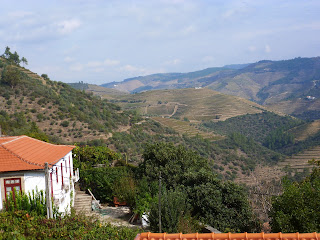
Our walking guide notes took some interpretation as we wound back down and it was with some relief that we reached the village of Vilarinho de Sao Romao. On the outskirts, to my great joy they were picking the grapes so we walked into the vineyard and were greeted most cordially by the owner, who spoke no English! All picking was by hand, into big buckets, then tipped into bins and carried off by truck to the quinta. The grapes were delicious! On a single vineyard there can be many different grapes which must make for some issues with ripening and harvesting them all at peak. This was the case at this vineyard with Tourega on one side and some other variety on the other.

Our accommodation Casa de Vilarinho http://www.casadevilarinho.com has an interesting history. You can see it above with the hostess and owner Cristina. Apparently it belonged to a Viscount who lost it as a gambling debt. Then the vineyard land was sold off and the house separately acquired by the Old Portuguese family who own it now. It has a lot of beautiful furniture and is very spacious and comfortable. Chestnut ceiling with beautiful ceiling rose of wood, and 'courting seats' in the window bays. Though as they are granite the courtship might need to be quite short as they are hard and cold!
Our dinner companions who were a day ahead of us on the walk, were a Norwegian woman and her American husband who have done a lot of sailing, including around the world, and also diving and fishing so lots to talk about. We had a very pleasant meal and evening with Kim and Reidun.
A lay day the next day, so we headed on a shorter walk, but still a lot of up and down and ended up being about 15k long. Visited Sabrosa village, the birthplace of Magellan as part of our walk. A highlight of this walk was the wild figs along the way. Delicious! And the usual spectacular views.
We then visited the nearby Quinta de Portal for a tour and tasting. Tasted three reds, from a cheap and cheerful, to a riserva and then a grand riserva. The distinguishing factor was the amount of Tourega went from 30% to 50% to 60% and the complexity and quality reflected this as well. We tasted with a couple from Lisbon who had visited NZ and had good English so certainly enjoyed the chat. They were very disconcerted that we were walking and wanted to host us, drive us somewhere and find food and accommodation for us.
The walk to Chanceleiros
So today the last walk is about 15 km. We started heading uphill through pine forest, and some eucalypt. It was a steady climb up to another of the Sao Domingos chapels. On the way we stopped in a village, Vilela, for a water break and were in time for the bread delivery. Van screeches to a halt in front of us. Horn beeps loudly several times. Woman comes out of door, and buys her rolls for the day and the van races off again.
Steady climb up to the chapel (another 860m hill) and again it was in immaculate condition. Then a long and treacherous descent with loose scree. Great views back over Casa de Loivos where we'd stayed on our second night of the walk and over the area we'd walked previously. Certainly steep!
We dropped down into a really pretty village, Covas do Douro, for lunch. Then it was a gentle walk down the road to our accommodation for the next two nights. Casa do Visconde de Chanceleiros.
http://www.chanceleiros.com. Palatial. We have a huge room with a separate wardrobe area and huge bathroom and also an anteroom. Then there's a private terrace overlooking the pool and a jacuzzi, which was a very pleasant way to restore tired legs.
Chanceleiros and Pinhao
We caught up with Kim and Reidun again for poolside drinks, pre-dinner champagne for Reidun’s birthday and a lovely meal. R and K have a sailing friend by the name of Dag Ekstrom who is from Sundsvaal in Sweden; we will look him up when we do the “heritage and ancestry” tour at some future date. Dag and a friend sailed around the world 1962-1964 in a 26 foot sailboat. Their adventure has just been celebrated in a book which is a bit tough going as it’s in Swedish. There is a Nils Persson in the book, one of the guys who restored the sailboat Lunkentuss recently and set up a little museum in Sundsvall, he looks very much like Pop. May be some interesting leads as Carl Erik Nilsson’s father was a Persson and I do recall Ekstroms on Andrew’s family tree. Unfortunately I don’t have a copy of it on the laptop, so will check it out when we get back.
Talking about look alikes, Kim could easily be Ken Crompton’s double. K and R have done some fantastic sailing and diving all around the world. You can visit www.metolius.net to see some of the places visited and check out the dinghy.
Ross and Michelle, Molly says hello, she looks just the same as the photo in your blog
We walked into Pinhao this morning via Quinta da Rosa for the obligatory Port and wine tasting. Watched the grapes being stripped off the stalks and then sent into the vats. This is a traditional vineyard. For a while they dispensed with the grape stomping but the wine didn’t taste as good they decided, so they reinstated it. It’s done at night, after the stompers have finished their day jobs, so Steve has missed out, to his disappointment! Purchased some stores for the boat and watched the process as well. This is a small winemaker 50 000 litres of Port and 200 000 litres of wine. It has been in the same family since 1906, when it was given to its current owner as a christening gift! Once it supplied Sandemans but has branched out alone, once regulations allowed them to do so. But still a highly regulated industry, for instance olive trees are not allowed to be planted in the vineyards as they need to be watered and watering of the vines isn’t allowed unless they are newly planted.

We had lunch at a local café in Pinhao, Ann had the fish, I had the pork, we both had a beer, a coffee, a piece of Port cake (aka drunken cake – it’s saturated in port) and a glass of port. He charged us 18 Euro which seems amazing…the two beers in NZ would have dealt to 10 Euros. Food is certainly cheap in Portugal. Maybe it was 'be kind to tourists’ day!!
We booked our train trip back to Porto tomorrow and the first leg of our journey up to Santiago de Compostela on Thursday where we pick up the first car. This ticket gets us to the Spanish border where the Spanish conductors enter the train and sell us a ticket for the rest of the leg, not that the train changes at all.
So the Valley of Gold walk is over, apart from another delicious dinner to look forward to tonight. It has been fantastic!
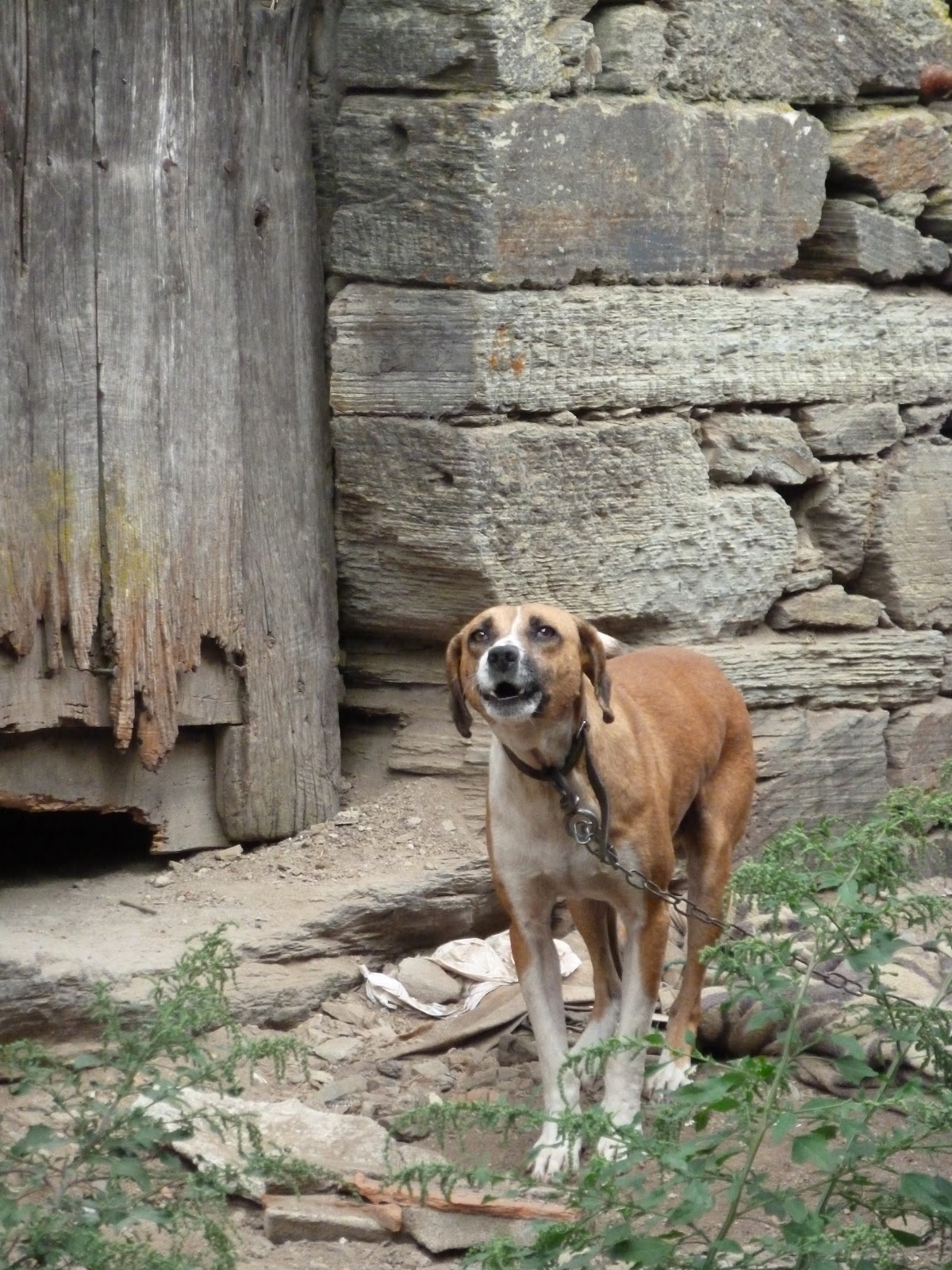
All-abiding memories of the walk: terraced hills, sweet wild fruit, chapel bells ringing the time and barking dogs in every village!