Departure from Visby went very
well on another beautiful sunny day. We took the taxi option to the airport, the summer bus timetable doesn’t start until June 15! The flight north to
Stockholm is only about 45 minutes. It was very clear with great views of the Stockholm
archipelago.
The bus from Arlanda was another very comfortable ride into Stockholm. Then followed a very warm walk downtown and across to Gamla Stan,
the island which is the original old city, to check in to First Hotel Reisen.
It's good to be back in Stockholm
again. We spent a bit of time here in 2014, but just saw the airport in
2016. We did a quick tour of the old city in preparation for our self-guided
walk tomorrow, and then walked a little in the downtown city. Late in the afternoon we
ended up in one of the outdoor eating places on the edge of Kungsgarten, a large and popular outdoor space in downtown Stockholm. It was peaceful this visit; last time we were here there were elections in
progress and some very unruly demonstrators, and lots of police
including quite a few of the mounted variety!
We decided it was hot enough for
a drink and we had done a lot of walking, so sat and had a nice cold beer. Ann learned the delights of drinking
warm Rose, a notable first. There are some quite different habits and cultures around many
foods, but warm Rose was really out there. I’m confident it won’t catch on in the southern
hemisphere.
It was a
cheap and cheerful dining experience as well, the fish and chips option was
quite popular.

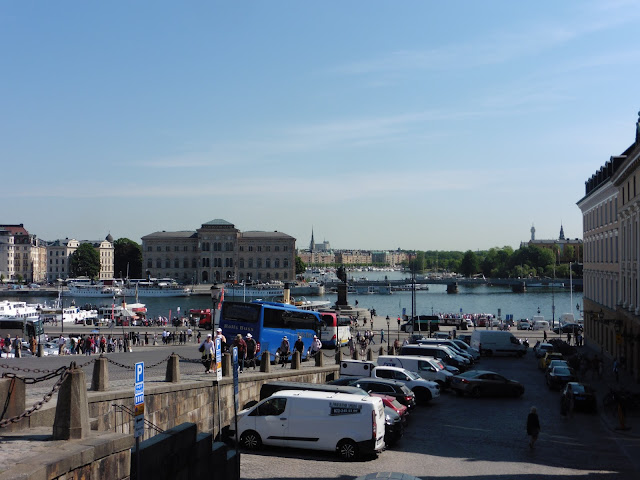
First Hotel Reisen was a
convenient place to stay, right on the waterfront, although much of Stockholm
can lay claim to that, and central without being in the main tourist trail. It's hard to get a good picture of it but it's central in this picture taken from across the harbour into the sun! Dozens
of buses deliver tourists to Gamla Stan every hour.
Tuesday morning we
headed into the old town on yet another Rick Steve guided walk - our world is full of those. The buildings
are interesting; in one street, originally occupied by merchants, the
houses sport a top floor boom and a hatch used to load goods into the attic and also a hatch at ground level for the coal delivery. Houses where the owner had paid a fire insurance premium were identified by a motif
on the front to alert the firefighters to save them first.
The land has lifted
here over the centuries, although not as much as in the Hoga Kustan further north
which is the fastest rising land mass on earth. There is still water transport
through a canal and waterways across Sweden, but that now requires the aid of a
few locks. In Viking times you could sail from one coast to the other. Dag and
Gunnar took the cross-country route in Lunkentuss when they returned to Sweden from their
round the world voyaging in 1965. The city walk shows evidence of lower water
levels now.
We took a break about midday to
watch the changing of the guard at the palace a few doors down from the hotel.
Quite a crowd gathered to view the little bit of pomp, I got growled at by one of the guards last time we were here because I touched one of the cannons, but all went smoothly this time.
We then walked uptown a bit to Ostermalm’s
covered market for coffee and fika.
The market is temporarily relocated while
the old brick building which is its usual home is renovated. The market was a bit
smaller but still had a great range of local produce. Some of the aged meats are intriguing and I'd like to try a few of those on the BBQ. We thought this might be a good place to buy our picnic lunch ingredients. We tend to have have a
big Swedish breakfast and then just a “coffee and muffin” or a light picnic for lunch. The
breakfast spreads are very large and you could well eat dinner first thing in
the morning and have a much lighter meal at night! I recall a course I was at
once which talked about the right eating/nutrition balance and the advice at that
was to have a large breakfast so you have plenty of energy for the day’s work. Can’t
say I ever took that advice.
Maps.me continues to be very
useful in finding our way around. The fact that it’s available off line is very
useful for travellers overseas like us who don’t have very good access to data packages for the mobile phone. If you stayed online for long periods of time wandering around cities
and the countryside, you'd spend a fortune. We located Akademibokhandeln where we found Laban’s Swedish
language birthday book. At the same time we bought the last two books of
Wilhelm Moberg’s series on Karl Oscar Nilsson. This series of historical novels cover Karl Oscar's migration with his family from
Smaland in southern Sweden to Minnesota. These are set around the time my great grandfather Karl Eric Nilsson was
born. It’s useful to understand the conditions at that time, when more than one
million Swedes left the country to find a better life.
Late Tuesday we had arranged to
meet Ludde’s parents Anna and Anders for a meal before going to a graduation
concert where their grand-daughter Mala was performing. We had a lovely meal at
EriK's Bakfikan and were joined by Ludde’s sister Fina, husband Magnus and
Mala’s other grandmother for the family occasion. We then went on to the three
hour graduation concert for Kungsholmen’s Gymnasium, Stockholm’s Musikgymnasium.
This is a school for 16-19 year olds who have a passion for music. The concert
was at the Berwaldhallen concert hall and was an outstanding experience. The
pupils sang 26 items in all, with no musical instruments for accompaniment, no
scores and the voices providing all that was required. They were very, very good.


Graduates from gymnasia all over Sweden wear a white cap to signify the completion of their three years of advanced study. When we first saw this in Visby we wondered if it was a stag party but the numbers increased as the day went on and our hotel receptionist explained the custom. It was quite moving when at the end of the concert the graduates donned their hats and marched out.
Wednesday we had a slow start and repacked for the few days out on Ljustero in the Stockholm Archipelago. We met Anna
and Anders early afternoon for a guided tour of the Hallwyl Mansion near the
waterfront. The was a house built for Wilhelmina von Hallwyl, daughter of the forest
baron Wilhelm Kempe. The wealth that built this mansion came from
timber, as is the case for many of Sweden's stately homes. Kempe had left his native
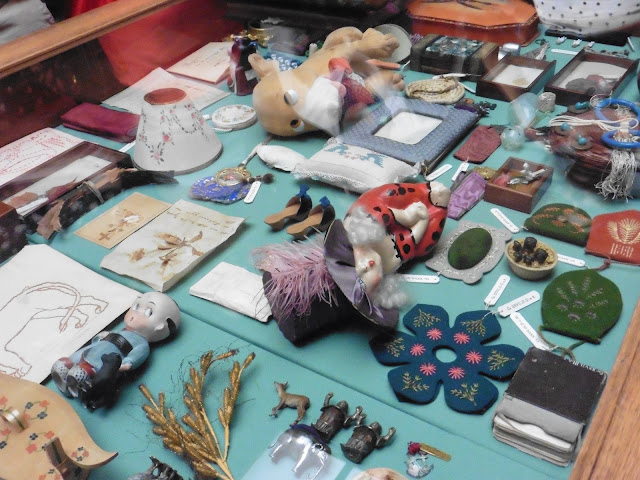
Switzerland and became a Swedish citizen. The home has a fantastic collection
of artefacts assembled by the eclectic and somewhat eccentric gatherer, Wilhelmina. She even saved a lock from her husband's beard and a piece of their wedding cake!
Early evening we departed for Ljustero, one of
the largest islands in the Archipelago,
on the steam ship Storskar.
This is a stately
old vessel which provided a very smooth voyage and the opportunity for a very
fine meal with Anna and Anders, who had gone to a lot of trouble to set up for
our few days at their holiday spot on the island. The food was very good, and Anders
and I partook in a Brannvin tasting, this is schnapps with almost an almond
taste. Some say it’s horrible, but I thought it was rather nice. It was
something we had to taste anyway. Wilhelm Moberg‘s books refer often to
brannvin which was staple part of the diet for everyone in Karl Oscar Nilsson’s
Sweden. Even children had bread dipped in branvinn for breakfast. Brannvin is alcohol distilled from potatoes, grain or wood cellulose. So it includes vodka and aquavit which is always flavoured. In Karl Oscar's day everyone made it, including the local priest!
Our dinner was much better than
brannvin and bread, and it is lovely way to spend the evening, cruising in the
very sheltered waters, stopping at many different islands to drop off and pick
up people. The boat just noses up to a block and people then walk off or on
across a very short gangway. It’s all very efficient. Our stop was Linanis
where Anna and Anders had left their car the day before. We then had just a
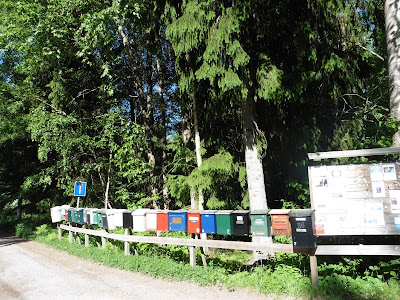
short drive to Skuggans Brygga where the family summer refuge is. The island scenery is great, lots of trees, just like the rest of Sweden. There are also lots of rocky
outcrops in this landscape sculptured by ice and glaciers millions of years ago. Clusters of letterboxes suggest large numbers of homes hidden in the trees.
Their block was originally part of a farm, and a sale advertisement for the original property is hanging on the wall in the house. The original title was
purchased about 25 years ago and a neighbouring block has since been added
giving a total area of about 3000 sq m. There are three houses, a music room under
development and a boatshed. Large decks abound. There is even a sauna built
into the small house. So there is plenty of space and accommodation for gatherings for the whole family.
It seems to be a
lot easier here to build a house on your property, it's nowhere near as restrictive as in NZ. You can build a
dwelling under 100 sq m footprint, with just a simple letter to the council and
a plan of where the building will be in relation to others around it, so it's easy to build cabins, garages and boatsheds. This is a lovely spot and nature is very near as you can see from the early morning picture.

Next day we took the car ferry across
to Ostana and then a passenger ferry to Siaro, a small island on which
a military fortress was built complete with underground tunnels and living for
the garrison stationed there. The guided tour was very good, and the guide had
captured lots of the humorous stories from the island’s past. It was built to
repulse the Russians, and admittedly it does overlook the main northern channel
in the archipelago going to Stockholm, but I’d imagine it wasn’t such a grand
facility that would have had the Russians quaking in their boots.
While we were on the island some really of the big ferries steamed past on their way to Finland.
After a relaxing drink, we had a lovely dinner of Gotland
lamb back straps on our deck that evening in quite idyllic surroundings.
We did have some drama in the day
when Ann went looking for her camera after we got off the ferry from Siaro and were back the
car. No camera. Fortunately Anders was able to ring the boat and set up a
recovery option for us in Stockholm. So it was a bit better than the last camera loss when the camera
continued on to San Jose after we got off a flight at San Francisco airport. We
arranged to pick this one up in downtown Stockholm, but had to catch a ferry a tad
earlier than planned on the next day to ensure we did have our options covered.
The ferry back to Stockholm in the middle of
the day did all the stops, Linanis, Grundvix, St Saxaren, Lilla Saxaren,
Storkran, Losten, Bjuro and Vaxholm. You cruise past delightful cottages,
cabins and houses perched on the rocky islands, with jetties, boat ramps and
the majority of the houses have a flagpole and fly either the flag or a
pennant.
We recovered the camera, and then
our bags from First Reisen Hotel. We hadn’t been able to stay another night
there, so had booked at Lilla Radmannen where we stayed in 2014. It was a hot
two km walk to the top end of town, but we did that almost all the way on Drottninggattan,
one of the main tourist streets so it was an interesting amble. The band Iron Maiden were in town and there were heaps of people with IM T shirts and plenty
of sellers in the pedestrian street on our way uptown.
Saturday morning I picked up a rental car. We had planned to catch a train to Sundsvall, but bailed because we couldn’t get
a direct train and the alternatives meant two or three changes and 6-8 hours
travel. Swedish train trips are quite scenic and enjoyable but the option available wasn't such an appealing one. Avis came up with the best deal this time.
We had a
leisurely drive through to Sundsvall, with a stop at Gavle for coffee. Traffic is very well behaved so the drive was a breeze. We arrived at Akrom
around 2 00 pm on a beautiful warm day.
Janne was working around the
stables and when he finished that we took a load of sawn timber and offcuts up
to Hulijan to Eva and Anders who are in the process of building a new woodshed
which looked like it had adequate capacity for more than two years of wood. It will have a small deck off the front of it so you will be able to sit there and have a coffee or a beer: buildings need to be flexible!
Sunday we did a local tour with Janne visiting all the fields and areas that their farming operations own or lease, or have owned and leased. We called in to see Lars Eric, a good mate of Janne, whose daughter Ida trains Kalla, the mare that
arrived back from Estonia the last time we were here. We toured some of the
hunting woods to get up to speed on where some of the meals we are about to have had come from. It was like we were picking up all the loose ends from 2014 and 2016! We visited Vanna Gardskott, a
piggery and abattoir that Janne has been working on intermittently since last
time we were here in 2016. Per Jonsson and Helena Westin, both vets, rear pigs
and process them through to consumer packs on site. They make some very nice
product.
Monday we headed to the hills.
Graftavallen is about 300 km, west towards Norway and we took the scenic route
to get a good appreciation of this part of Sweden. Lakes, rivers and trees abound. Tree
crops can take a hundred years to mature so you need to be a little patient with
your investments.
We stopped for provisions at the
ICA Supermarket in Bracke, and then again just down the road for an ice-cream.
The ice-creams were lovely, scooped into waffle cones made on the spot. The ambience
is quaint, with lots of quite old signs offering advice on life and living. There
were charts on the wall where people left a pin in their place of origin. We
stuck the first pin for NZ into Auckland, we’ll check next time to see if there
are more NZ customers.
Late afternoon we arrived at the mountain and Graftavallen. The family cabins, three in all, are located near the river, surrounded by trees, in a very
lovely setting.
The houses are heated all year round and are kept at about 15 degrees with several wall panel
heaters on thermostat control. Winter is seriously cold here, everything freezes. The water has to be turned off and pipes drained on
departure so that water in pipes doesn’t freeze and crack them. There are
snowmobile trails, ski trails and some ski lifts further up the hill. Our initial
walk took us through the old summer pastures for three local dairy farmers. These are relics of days gone by and the farmers have been gone for 50 years or so. There are also lots of walking tracks in the woods, some decorated by trolls that are a part of night skiing events where participants have to locate as many of those creatures
as possible.
The rivers are beautiful and
clear, running over very stony bottoms and they produce good fish for those
inclined to throw in a line. Worms are the preferred bait (by the fishermen
that is).
So up till now, we hadn’t had
cold on this trip. Suffice to say by the end of the day, we were both in four
layers, and the fire was going at night. On the first night, I went outside (for
the loo) at about 2 00 am and the car was white with snow and the ground covered with a
sprinkling also. It was lovely and warm in the cabins, where the thermostats
had been cranked up a bit.
Our first walk on Tuesday was to
a small waterfall and we walked up the river to get there, plenty of moose sign around, and still plenty of snow in gulleys. At the waterfall we stopped for a coffee and fika, then we went
straight up the hill. This took us through areas with low ground cover and many native flowers plus lots
of blueberry bushes. We stopped at about 800m altitude
and then wandered back
down the cabins. We visited a few other cabins to see how others have built, Lars Eric's new house was very smart.
After lunch we drove to look at the local airfield and then up to a much bigger waterfall
and some very interesting houses and history. Janne gives a very good commentary on the people who were there and the people who are there now - he is a mine of information.
Early evening Janne suggested
another walk, Ann stayed home to do some dinner prep and Janne and I headed
off. The plan was to go up a walking track, to above the tree line (about 830m)
and enjoy the view. “It shall take about 25 minutes” said Janne, and led off at
a fast clip over the quite uneven rocky trail. About half way he invited me to
go in front and I continued on at what I thought was the same pace. Janne
followed giving a continuous commentary on the history and happenings. When we
got to the top Janne said, “That was 17 minutes, I have never been that fast”.
So the legend lives on. Janne posted on FB about the walk, and his Swedish said something like "Steve is one hell of a good hiker" I can't read the Swedish and usually press "translate" to get the gist of any Swedish postings. The translation was a classic "Steve's a son of a bitch". We are still having a very good chuckle, and the phrase "lost in translation" is now referred to often! We then strolled further up the bare solid rock to
about 920m into the teeth of a howling breeze. It was a good walk and the view
was fantastic.

While we were at Graftavallen, we saw moose,
fox, hare, rabbit, and grouse. (The rabbit was the only animal that stayed together long enough to capture!) It is a pretty special environment.
Wednesday we drove down to Ljungaverk, where Jenny (Janne and Margareta’s daughter) and her
family live. June 6 is Sweden’s national day and Jenny was singing the national
song and then a few more songs at the local celebration put on by Karlsro Flyers, the
local classic car club. They have a great array of Pontiacs, Chevrolets,
Cadillacs, Plymouths, Dodges, Camaros and Mustangs, plus a few Europeans, but
they really love that heavy iron from Detroit. We collected Margareta from the
train before the event, enjoyed the festivities and then ambled back to Akrom late in the day.
Thursday we picked up Svante
Ekholm, Dag’s brother and we drove to Harnosand to visit Fritids Bats Museet
where the fully restored Lunkentuss is now on show along with many beautiful,
or will be when restored, Swedish pleasure craft.
Hendrik Olsson, the museum
manager opened up especially for us. This museum gave a fascinating insight
into the relationship the Swedish people have with their boats. Apparently the
ratio of boat to people is far higher than anywhere else in the world: 1 – 8.
The boats have often been retrieved from the many lakes and waterways around
the country. The English captioning was particularly good and we learned a lot
about famous designers and trends in boating: for instance that in the 1930s
nude boating was quite a trend, and that a famous Swede, Sven Yrvind, designed
a boat and sailed across the Atlantic with his wife on a diet of sardines and
muesli. The boat survived but the marriage didn’t!!
At the age of 83, Sven Yrvind is
currently sailing to NZ in a 6 metre boat, via Cape Horn and the Roaring 40s.
On the way home we had a good
visit to the coastal area around Timra, and the area that Svante had lived in
as a child.
Friday morning I put on some
working clothes and Janne and I went and did a few hours work putting the
roofing on and bracing up a pig shelter on for Per and Helena at Vanna Gardskott. That was a bit of
fun and took some pressure off Janne, who at 71 is still working pretty much
all of the time, and this little project needed to be completed.
Friday afternoon we put up the
marquee ready for the Saturday afternoon gathering. Friday evening late Anna,
Isak and Simon arrived from Lulea. It’s a long 500 km
trip for them, and it was great that they could come.
Saturday morning was pavlova
training time for Anna, in preparation for fika at 2 00 pm. Despite the
vagaries of a strange oven and different materials it turned out really well,
and added a NZ stamp to a very Swedish celebration.
The family gathered were mainly
Janne’s brothers and their children and it was great to see them all. Janne's sister Gunilla had died two weeks ago, and so it was a sad occasion sometimes for everyone, but it
was a lovely family get together. The evening meal was a bbq, with two very
large bbqs and about six people doing the cooking. Quite an event.
Sunday afternoon we visited
Alnon, the beautiful island which is part of Sundsvall city; just over a bridge
in fact. We did the circumnavigation, calling in to many little bays and harbours. One
of Karl Eric’s half-sisters lived on this island, so we do have a connection here. Unlike the largely industrial coastline of Sundsvall, the island,
especially on the sea side is very restful and beautiful.
Monday was a pretty relaxed day.
We visited the new Pilgrims’ Centre being built by the local church. Janne
had talked about it last time we were here, and the centre is nearing
completion. It is located in what was a large dairy farm The centre of the
huge building, once a barn, and milking shed, has been converted into a reception area for
pilgrims doing St Olavsteden walk from Selanger to Trondheim. It’s great to see
that they have incorporated much of the structural elements of the original
building, but have installed insulation, a really modern catering kitchen and many
other home comforts for those setting out on the walk.

While we were there we tended Janne’s family
grave, and also Margareta’s mother's grave. We also met David Zetterholm who was just setting out
to do the 29 day 600 km pilgrims' walk. St Olav, then King Olav, landed at Selanger about 1000 years ago.
This was the man who Christianised the country. You can’t land a boat a
Selanger any more, the lifting land mass means that the water is now about 3 km
away.
We left Sundsvall Tuesday morning
on a 10 am fast train ( up to 186 km/ hour in fact) and have had a restful
day, doing the blog and getting prepared for the marathon 39 hour trip home
which starts tomorrow. This has been a lovely relaxed time with Janne and
Margareta and the families. They will visit NZ again in Dec/January, and in all
probability we’ll be back to this lovely part of the world some time.